
Spotlight for this month

4 min read
Carpet area vs built-up area vs super built-up area explained
A complete guide to understanding property measurements including carpet area, built-up area, and super built-up area for smart homebuyers.
Carpet Area vs Built-Up Area vs Super Built-Up Area Explained
When it comes to buying a home in India, understanding exactly what you are paying for is absolutely essential. Yet one of the most persistent sources of confusion among homebuyers — both first-timers and experienced investors — is the difference between carpet area, built-up area, and super built-up area. These three terms are used constantly in real estate conversations, property brochures, and legal documents, but they mean very different things — and confusing them can lead to costly misunderstandings.
Whether you are exploring a well-crafted residential developments like Indraprasth Shivanta, Indraprasth Saptak or comparing multiple properties across different builders, Understandingthese terms can help you compare projects correctly, avoid paying for unusable space, and make smarter investment decisions.
In this guide, we breakdown each term in simple, practical language and explain exactly why the differences matter to your home-buying decision.
Carpet Area – The Actual Usable Space you Live In
Since the implementation of the Real Estate (Regulation andDevelopment) Act (RERA), developers are required to sell apartments based on Carpet Area, bringing greater transparency for buyers. This isa significant consumer protection measure, as it makes property pricing more comparable across different projects.
According to Section 2(k) of RERA, Carpet Area means:
The net usable floor area of an apartment excluding the area covered by external walls, service shafts, exclusive balcony or veranda area and exclusive open terrace area, but including the area covered by internal partition walls.
Carpet Area = Netusable area + Internal walls
Carpet area is the most honest and practical measurement of a home's size. In the simplest terms, carpet area refers to the net usable floor space inside your apartment — the area where you could literally lay a carpet from wall to wall. This is the space where you actually live, move around, place your furniture, and conduct your daily activities.
What it includes:
Carpet area includes all the areas within the apartment that you use directly: your bedrooms, where you sleep and store clothes; the living room, where you relax, entertain guests, and spend family time; the kitchen, where meals are prepared; bathrooms and toilets, which are essential functional spaces; and any internal corridors or passages that connect these rooms within the apartment itself.
What it excludes:
What carpet area does NOT include is equally important to understand. It excludes the thickness of the walls that surround and divide the internal spaces. It excludes balconies, terraces, utility areas, and any other spaces attached to the apartment but not enclosed within its main living area. It also excludes any common areas outside the apartment door.
How to calculate carpet area:
Suppose your apartment has the following dimensions:
In well-designed homes like Indraprasth Marigold, the carpet area is carefully optimized to ensure maximum efficiency of space. Good design means that every square foot of carpet area is genuinely usable — there are no awkward corners, wasted passages, or poorly proportioned rooms. When you visit a property, you may walk through each room and assess how the carpet area translates into practical, livable space rather than just looking at numbers on a brochure.
Built-Up Area – Adding the Structural Shell
Built-up area takes the carpet area and adds to it the spaceoccupied by the structural elements that make the apartment a physical reality.
Built-up Area = Carpet Area + External Wall Area + BalconyArea
As a general rule of thumb, built-up area is typically 10 to 20percent larger than carpet area. The exact percentage depends on the design of the building — the thickness of construction materials used for walls, the size of balconies provided, and whether there are utility areas attached to individual apartments. Understanding built-up area helps you appreciate the physical structure of what you are buying — not just the space you walk around in, but the walls, structure, and attached outdoor spaces that complete your home.
What it Includes:
Built-up area includes the carpet area plus the thickness of all internal walls (the walls that divide rooms within the apartment) and external walls (the walls that form the outer boundary of the apartment), as well as the area of balconies and any utility spaces or dry areas attached to the apartment. While balconies are included in the built-up area measurement, they genuinely add to the quality and character of an apartment in a way that is easy to appreciate in person.
How to calculate Built-up area:
Carpet Area = 750sq.ft
External Walls = 85sq.ft
Balcony = 65 sq.ft
Built-up Area = 750 + 85 + 65 = 900 sq.ft
In modern residential developments like Indraprasth Shivanta, balconies are carefully designed to serve both practical and aesthetic purposes. A well-designed balcony extends the livable feel of an apartment, provides space for potted plants or outdoor seating, and enhances natural light and ventilation with in the home. In all Indraprasth projects, buildings constructed with thicker traditional brick walls will show a larger gap between carpet and built-up area than buildings using modern lightweight construction systems.
Super Built-Up Area – The Saleable Area
Super Built-up Area is the Built-up Area plus a proportionate share of common areas and amenities shared by all residents of the building.
Super Built-up Area = Built-up Area + Proportionate CommonArea
Super built-up area is the most expansive measurement that builders and developers typically use as the basis for pricing in the absence of RERA-mandated carpet area pricing. This is also called the Saleable Area by many developers.
What it includes:
These common areas are substantial in most modern residential developments. They include the entrance lobby and reception area, which creates the first impression of the building; lift shafts and lift lobbies on every floor; common staircases and fire escape stairways; corridors and passages one very floor that provide access to individual apartments; the clubhouse and its associated facilities like gyms, swimming pools, and multipurpose halls; security cabins, generator rooms, pump rooms, and other utility spaces that serve the entire community.
In 3 BHK and 4 BHK projects like Indraprasth Saptak, these shared spaces are not mere functional necessities — they are designed to elevate the overall living experience. A beautifully designed lobby with high-quality finishes creates a sense of arrival. A well-equipped clubhouse becomes a community gathering point. Thoughtfully landscaped common areas between buildings enhance the visual appeal of the entire development. These amenities justify their proportionate inclusion in the super built-up area and genuinely enhance the quality of life for all residents.
The ratio of super built-up area to carpet area is commonly referred to as the loading factor or the floor space index loading. Indifferent projects, this ratio can vary significantly — from as low as 1.2 in projects with minimal common areas to 1.5 or even higher in luxury developments with extensive shared facilities.
Why the Difference Matters:
Comparison of Carpet Area, Built-Up Area, Super Built-Up Area
Let us put these concepts into practical context with a simple example.Imagine two apartment projects Project A and Project B, both advertised as1,200 square feet. Project A bases its measurement on super built-up area, while Project B bases it on carpet area. In Project A, the actual carpet area might be just 800 square feet — because a large loading factor covers common areas. In Project B, the 1,200 square feet is the actual space you live in.
If both projects charge the same price per square foot, ProjectB is offering dramatically more value. This kind of comparison is exactly whyRERA mandated carpet area pricing — to make comparisons fairer, more transparent, and more meaningful for buyers.
When you are comparing properties across different builders, always ask for and compare carpet area figures. Do not be misled by larger super built-up area numbers. A higher super built-up area simply means a larger proportion of your purchase price is going toward shared spaces rather than your own private living area.
Smart Buyer Tips for Area Calculations
1. Verify the floor plan to understand how much space is actually usable. Floor plans can also be misleading — physically walking through the actual space tells you much more about carpet area.
2. Don't rely only on the advertised super built-up area. Visit thesite and physically walk through the apartment amenities to get a genuine feelfor the space. Ask the developer to show you exactly what common areas are included in the super built-up area loading, so you can judge whether thoseshared spaces genuinely add value to your daily living experience.
3. Always ask for the RERA Carpet Area before comparing apartments. Compare pricing of properties using price-per-square-foot of carpetarea, not price-per-square-foot of super built-up area, for a true apples-to-apples comparison between projects.
4. Always insist on getting the carpet area in writing, as part of the official agreement and not just as a verbal assurance.
5. Check the project's RERA registration and approved plans before booking. Under RERA, developers are legally required to provide thisinformation.
Conclusion
Understanding the difference between carpet area, built-up area, and super built-up area is one of the most empowering things a homebuyer can do before entering the market. These three measurements are not interchangeable, and treating them as if they are can lead to significant misjudgments about the true value of a property. Developments like Indraprasth Shivanta are built on a commitment to transparency and customer trust, giving buyers complete clarity on all area measurements so that every purchase decision is made with full information and genuine confidence. Knowledge is your greatest tool as a homebuyer — use it well.
Frequently Asked Questions
Which area is used under RERA?
RERA mandates that apartments be sold and disclosed based on CarpetArea.
Is balcony included in Carpet Area?
No. Exclusive balconies and verandas are excluded from the RERA definition ofCarpet Area.
What is the difference between Carpet Area and Built-up Area?
Built-up Area includes the Carpet Area along with the external wall thicknessand balcony area, whereas Carpet Area represents only the usable indoor space(including internal partition walls).
Why is Super Built-up Area larger?
It includes your apartment plus a proportionate share of common areas such ascorridors, staircases, lobbies, lifts, and other shared amenities.


Recent blog
Latest Articles
4 min read
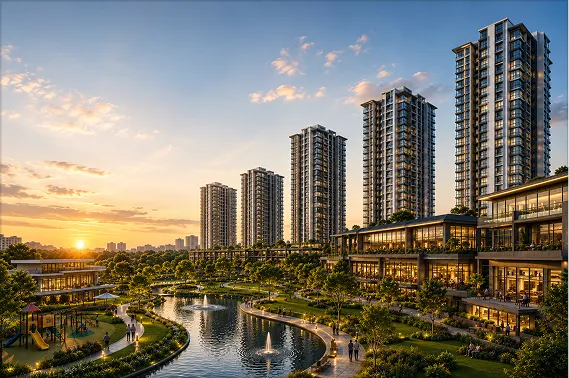
The future of integrated townships
Introduction
Integrated townships are no longer just a concept — they are rapidly becoming the defining model of modern urban development across India. These large-scale, carefully planned communities combine residential living, commercial activity, retail spaces, recreational zones, and social infrastructure within a single, cohesive environment. As Indian cities continue to grow and urban populations swell, the integrated township model is emerging as one of the most effective and sustainable approaches to meeting the housing and lifestyle demands of the 21st century.
For homebuyers, integrated townships offer something fundamentally different from standalone apartment complexes or individual housing plots. They offer a complete ecosystem — a place where residents can live, work, shop, exercise, and socialise without needing to travel significant distances. This holistic vision of community living is resonating deeply with modern buyers, particularly in cities like Ahmedabad where urban expansion is happening rapidly and thoughtful planning is essential to sustain quality of life.
Legacy Rooted in Vision
The concept of integrated development is built on a powerful foundational idea: that the best communities are not just collections of buildings but thoughtfully designed environments that support and enrich every aspect of human life. This idea has roots in urban planning philosophies that go back decades, but it has never been more relevant or more achievable than it is today.
Modern integrated township developers invest years in the planning phase before a single brick is laid. They study the topography of the land, the movement patterns of future residents, the placement of green spaces, the width and flow of internal roads, and the positioning of commercial and social amenities to ensure that everything works together harmoniously. The result is a community that feels cohesive and intuitive rather than pieced together as an afterthought.
In the Indian context, this visionary approach has been embraced by leading developers who understand that today's homebuyer is looking for far more than four walls and a roof. They want a lifestyle — a sense of community, a feeling of security, and access to conveniences that genuinely enhance their daily experience. Integrated townships deliver on all of these fronts simultaneously.
Building Trust, One Project at a Time
Township developments are fundamentally long-term undertakings. Unlike smaller residential projects that can be completed in two or three years, large-scale integrated townships often span a decade or more of phased development. This extended timeline demands an extraordinary level of planning discipline, financial stability, and commitment to quality from developers — and it places a correspondingly high level of trust in the hands of homebuyers who commit to these projects early.
Building and maintaining that trust requires consistent, transparent communication throughout the development journey. Buyers need to know that construction timelines are being met, that quality standards are being upheld, and that the promises made at the time of sale are being fulfilled phase by phase. Developers who excel in this regard are the ones who build lasting reputations and strong repeat buyer bases.
Key factors that drive trust in integrated township developments include well-planned internal infrastructure with properly laid roads, underground utilities, and drainage systems designed to serve the full community; efficient road and transport networks that ensure residents can move freely within the township and connect easily to the wider city; abundant open green spaces that provide residents with parks, gardens, and recreational areas to enjoy year-round; and community facilities and amenities — from clubhouses and sports courts to schools, healthcare centres, and retail hubs — that are delivered as promised.
When a developer consistently delivers on these elements across multiple phases of a township, they build a track record that speaks louder than any marketing campaign. Residents become advocates, recommending the project to family and friends, and future phases see strong demand driven by word-of-mouth credibility.
Landmarks That Define Urban Living
One of the most remarkable aspects of successful integrated townships is the way they evolve into landmarks — reference points within the urban fabric of their cities. This happens because of their sheer scale and the comprehensiveness of their planning. An integrated township is not just a residential address; it becomes a destination.
Within the boundaries of a well-planned township, residents have access to schools and pre-schools where their children can receive quality education without a long daily commute. Healthcare facilities — clinics, diagnostic centres, and in larger townships even full hospitals — ensure that medical needs are addressed promptly and conveniently. Retail spaces ranging from supermarkets to specialty stores, from cafes to fine dining restaurants, create a vibrant commercial ecosystem that serves both residents and visitors from surrounding areas.
Recreational infrastructure is another defining feature of landmark townships. Well-equipped clubhouses with gymnasiums, swimming pools, and multipurpose halls serve as community gathering spaces. Landscaped parks and jogging tracks encourage active outdoor living. Children's play areas provide safe, engaging spaces for younger residents. Sports courts for cricket, tennis, badminton, and basketball cater to residents of all ages and fitness levels.
The cumulative effect of all these elements is the creation of a complete urban environment that can meaningfully improve the quality of life of its residents — an environment that residents feel proud to call home and that the city as a whole comes to recognise as a benchmark development.
Evolving With Time & Technology
The most forward-thinking integrated townships today are not just incorporating modern design principles — they are actively embracing smart technology and sustainable development practices to create communities that are more efficient, comfortable, and environmentally responsible.
Energy-efficient building design is increasingly standard in new township developments. Buildings are oriented and designed to maximize natural light and ventilation, reducing dependence on artificial lighting and air conditioning. Solar energy systems, energy-efficient appliances, and LED lighting throughout common areas contribute to lower electricity consumption and reduced operational costs for residents.
Water management is another area where modern townships are making significant strides. Rainwater harvesting systems collect and store monsoon rainfall for use in landscaping and common area maintenance. Sewage treatment plants within the township treat wastewater and recycle it for non-potable uses, reducing the community's dependence on external water supply and minimising environmental impact.
Digital security solutions — including CCTV surveillance networks, biometric access control, and app-based visitor management systems — enhance the safety of residents while providing the convenience of remote monitoring. Smart home automation features in individual apartments allow residents to control lighting, climate, security, and appliances through their smartphones, adding a layer of comfort and energy efficiency to daily living.
Looking Ahead: The Future We're Building
As India's urban population continues to grow and the pressure on city infrastructure increases, integrated townships will play an increasingly central role in shaping how people live and how cities expand. The future of urban development lies in creating planned ecosystems that can absorb population growth gracefully — communities that grow and evolve without losing their essential character and quality.
Future integrated townships will likely go even further in blending residential, commercial, and institutional uses within a single planned environment. The boundaries between living, working, and leisure will become increasingly fluid, with more opportunities for residents to work close to home, access high-quality healthcare and education within walking distance, and enjoy rich cultural and recreational offerings without leaving their community.
Sustainability will be a non-negotiable feature of future townships rather than an optional add-on. Developers who embed environmental responsibility into the DNA of their projects from the earliest planning stages will be best positioned to meet the expectations of an increasingly conscious homebuyer population and the tightening sustainability requirements of regulatory bodies.
Closing Thought
Integrated townships represent far more than a real estate format — they represent a vision of how we want to live as communities in an increasingly urban world. By combining thoughtful planning, quality construction, modern technology, and genuine care for resident well-being, the best integrated townships are creating environments where people can truly thrive — not just today, but for generations to come. The future of urban living is being shaped right now, one thoughtfully planned community at a time.
4 min read
Importance of RERA registered residential projects
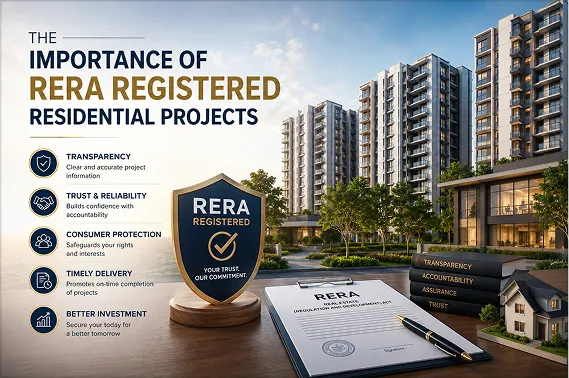
Importance of RERA Registered Residential Projects
The Real Estate (Regulation and Development) Act, commonly known as RERA, represents one of the most significant and positive transformations in India's real estate sector in recent history. Enacted in 2016 and progressively implemented across Indian states, RERA fundamentally changed the relationship between homebuyers and developers — shifting power toward buyers, mandating unprecedented levels of transparency, and creating a robust accountability framework that protects homebuyers' interests at every stage of the property purchase journey.
Before RERA, the real estate market in India operated in an environment where developers held most of the informational and legal advantages. Buyers often had to rely on developers' marketing materials for key project information, had limited legal recourse in cases of delays or quality failures, and frequently encountered hidden charges, misleading specifications, and unilateral changes to project terms. RERA changed all of this, and for buyers today, investing in a RERA-registered project like Indraprasth Saptak is one of the most important forms of protection available in the market.
Transparency in Information – Complete Clarity Before You Commit
One of RERA's most powerful provisions is its requirement for comprehensive, standardized information disclosure by developers before a project can be marketed or sold. When a project is registered with RERA, the developer must publish detailed information on the state RERA portal, where it is accessible to any interested buyer at any time. This information covers the complete project details including layout plans, floor plans, and structural specifications; the exact carpet area of each unit type expressed in the standardized RERA definition; the names and qualifications of the architects, engineers, and contractors involved in the project; all regulatory approvals already obtained and those still pending; the phased development schedule with specific delivery milestones for each phase; and the quarterly construction update reports that developers must file throughout the project's lifecycle.
This level of disclosure means that buyers are no longer dependent on developers' sales teams for information that could be biased or incomplete. Projects like Indraprasth Saptak ensure that buyers have complete clarity on every important aspect of their purchase before making a commitment — creating a genuinely informed decision-making environment that respects buyers' intelligence and financial stakes.
Protection Against Delays – Accountability That Has Real Teeth
Project delays were arguably the single most significant pain point for Indian homebuyers in the pre-RERA era. Stories of projects delayed by several years — sometimes indefinitely — were unfortunately common, leaving buyers locked into EMI payments on home loans while continuing to pay rent, with little legal recourse against developers who missed deadline after deadline.
RERA addresses this issue with clear, enforceable provisions. Developers must commit to a specific project completion date at the time of registration, and any changes to this date require prior approval from the RERA authority. If a developer fails to deliver possession by the committed date for any reason other than force majeure events specifically defined under the Act, the buyer has the right to either withdraw from the project and receive a full refund of all amounts paid with interest, or to continue with the project and receive compensation for the delay period in the form of interest on all amounts paid.
This provision transforms the economics of delays for developers, making timely delivery a genuine financial priority rather than just a marketing promise. For buyers investing in RERA-registered projects like Indraprasth Saptak, the delay protection provisions provide meaningful financial security and the peace of mind that comes from knowing their rights are clearly defined and legally enforceable.
Legal Security – Protection From the Full Spectrum of Unfair Practices
Beyond transparency and delay protection, RERA provides homebuyers with legal protection against a wide range of unfair practices that were previously common in the unregulated market. Misleading advertisements — brochures or presentations that show amenities, views, or specifications that are not actually part of the sanctioned project — are prohibited under RERA, and developers can be penalized for making representations that are not consistent with the registered project details.
Hidden charges are another category of unfair practice that RERA addresses directly. Developers cannot levy charges for amenities, infrastructure, or services that were not disclosed at the time of the original agreement. The total price payable by a buyer must be fully transparent and consistent with the registered project information. False commitments — promises made during the sales process that are not reflected in the formal agreement — are not enforceable and cannot be used to create additional obligations for buyers. RERA gives buyers the confidence to rely on what is in the registered documents, not just what is said across a sales table.
Standardized Processes – Consistency and Verifiability
RERA creates a standardized framework for real estate transactions that brings consistency, predictability, and verifiability to a market that previously operated with significant variation in documentation standards and contractual practices. All project details, developer credentials, financial statements, and construction updates are available on publicly accessible state RERA portals, allowing buyers to independently verify any information provided by a developer's sales team.
The standardized agreement for sale template mandated under RERA ensures that key terms of the transaction — the exact specification of what is being purchased, the payment schedule, the possession date, the developer's obligations, and the buyer's rights — are clearly expressed in a legally consistent format. This standardization makes it significantly easier for buyers to compare projects, understand their rights, and seek legal recourse if needed.
The RERA Grievance Redressal mechanism provides buyers with an accessible, relatively low-cost forum for resolving disputes with developers — far quicker and less expensive than traditional civil litigation. This mechanism means that buyers are not deterred from asserting their rights by the prospect of protracted and costly legal proceedings.
Quality Assurance – Structural Integrity Over the Long Term
RERA's protections extend beyond the purchase and possession stages to cover the long-term quality and structural integrity of what has been built. Under the Act, developers are required to rectify any structural defects in the building that are reported by residents within five years of possession, at no additional cost to the buyer. This provision creates a powerful incentive for developers to invest in quality construction from the very beginning, knowing that shortcuts taken during construction may result in costly rectification obligations after handover.
This defect liability provision is particularly important in a market where the quality of materials and construction practices can vary significantly between developers. For buyers choosing RERA-registered projects like Indraprasth Saptak, it provides the confidence that any structural issues discovered within the liability period will be addressed by the developer — protecting both the safety and the long-term value of their investment.
Why RERA Registration Matters Especially in Ahmedabad
Ahmedabad's real estate market has grown rapidly over the past decade, attracting buyers and investors from across Gujarat and beyond. This growth has been accompanied by a significant increase in the number of developers and projects, making it all the more important for buyers to have reliable frameworks for evaluating the trustworthiness of projects and developers.
Gujarat RERA (GujRERA) has been one of the more active and effective RERA implementations in India, with a substantial number of registered projects and a functioning grievance redressal system. For buyers in Ahmedabad, checking GujRERA registration is a simple but essential first step in evaluating any property purchase. It provides immediate access to key project information, gives confidence that the developer has met minimum disclosure standards, and ensures that the buyer's legal protections under RERA apply to the transaction.
Conclusion
Investing in a RERA-registered project is not just a legal formality — it is a fundamental decision that shapes the security, transparency, and peace of mind of the entire home-buying experience. RERA registration provides buyers with the information they need to make genuinely informed decisions, the legal protections they need to guard their investment against delays and unfair practices, the quality assurances they need to have confidence in what they are buying, and the dispute resolution mechanisms they need to assert their rights efficiently if problems arise. Developments like Indraprasth Saptak reflect a deep commitment to transparency, accountability, and trust — values that are embodied in RERA compliance but go far beyond it into every aspect of how the project is designed, built, and delivered. For every homebuyer in Ahmedabad, RERA registration should be the starting point of every property evaluation — not an afterthought.

4 min read
Must-have amenities in modern 2/3 BHK apartments
Must-Have Amenities in Modern 2/3 BHK Apartments
The definition of a good home has changed profoundly over the past decade. Today's homebuyers — particularly in India's rapidly growing cities — are looking for far more than a well-designed apartment. They are looking for a complete lifestyle experience: a living environment that supports their health, nurtures their families, enables meaningful social connections, and reflects their aspirations. This shift in expectations has fundamentally transformed what modern residential developments must offer, and the best projects are rising to that challenge in impressive ways.
Residential developments like Indraprasth Shivanta have been designed with this evolved understanding of home at their core. Every amenity offered is the result of careful thinking about how residents actually live, what genuinely enhances their daily experience, and how a residential community can be designed to bring out the best in the people who call it home. In this guide, we explore the must-have amenities in modern 2 and 3 BHK apartment communities and explain exactly why each one matters.
Security & Safety – The Foundation of Comfortable Living
Before any other amenity can be truly enjoyed, residents need to feel safe. Security is not just a feature — it is the bedrock on which comfortable, confident, and happy community living is built. Modern residential projects like Indraprasth Shivanta approach security as a layered, comprehensive system rather than a single measure.
Round-the-clock trained security personnel at the entrance and strategic points within the development ensure a visible, responsive security presence at all times. CCTV surveillance systems with high-resolution cameras covering the entrance gates, parking areas, common corridors, lifts, and other key common areas provide continuous monitoring and a reliable evidence record in the event of any incident. Access-controlled entry systems — using RFID cards, biometric readers, or smartphone-based digital access — ensure that only authorised residents and their guests can enter the gated community.
Video door phone systems in individual apartments allow residents to see and communicate with visitors before granting access, adding a critical layer of security at the apartment level. Intercom connectivity between apartments and the security cabin ensures rapid communication in any situation. For families with young children or elderly members, this comprehensive, multi-layered security environment provides genuine peace of mind — the confidence that their community is safe, monitored, and responsive.
Clubhouse & Community Living – Where Neighbourhoods Become Communities
A well-designed, well-managed clubhouse is often the heartbeat of a residential community. It is the space where neighbours become friends, where community identity is forged, and where residents find a genuine sense of belonging beyond their individual apartments. In modern developments like Indraprasth Shivanta, the clubhouse is designed and programmed to serve this social function actively, not just to exist as a ticked box in a brochure.
The physical space of the clubhouse provides multiple functional zones to serve different needs. A generously sized multipurpose hall with good acoustics, professional lighting, and modern audio-visual equipment can host everything from community meetings and children's birthday parties to cultural events and festive celebrations. Dedicated indoor recreation spaces — for table tennis, carom, chess, and indoor games — provide year-round entertainment options that encourage spontaneous social interaction. A well-appointed lounge and reading area gives residents a comfortable alternative gathering space for quieter social interaction. The result is a clubhouse that sees genuine, frequent use across multiple generations of residents — one that becomes a genuine community anchor.
Fitness & Wellness – Supporting Healthier, Happier Lives
Health and wellness have moved from the periphery to the centre of modern lifestyle aspirations. The pandemic accelerated an already growing awareness of the importance of physical fitness, mental well-being, and the value of having dedicated wellness infrastructure close to home. Modern residential developments that take this seriously are designing fitness and wellness amenities that are genuinely useful and genuinely used — not token gestures.
A fully equipped gymnasium with professional-grade cardio equipment — treadmills, ellipticals, stationary bikes, and rowing machines — alongside free weights, weight machines, and functional training areas provides residents with a complete fitness resource that eliminates the need for expensive external gym memberships. The convenience of having a well-equipped gym within walking distance of your apartment is a genuine quality-of-life improvement that residents appreciate daily.
Dedicated jogging and walking tracks, ideally designed to wind through landscaped green spaces within the development, encourage regular outdoor physical activity in a safe, pleasant environment. Yoga pavilions and outdoor meditation spaces, positioned in quieter, more secluded areas of the development, provide residents with spaces for mind-body practices that are increasingly part of mainstream Indian wellness culture. For children, dedicated play areas with age-appropriate equipment and safe fall-absorbing surfaces provide essential spaces for physical play and outdoor social interaction — an increasingly precious resource in dense urban environments.
Green Spaces – Nature as a Daily Companion
Access to natural environments has a profound and well-documented positive impact on human well-being — reducing stress, improving mood, encouraging physical activity, and creating a more harmonious and pleasant living environment overall. In modern residential developments, the quality and quantity of green spaces is a critical differentiator that directly affects residents' quality of life on a daily basis.
Indraprasth Shivanta includes thoughtfully designed and carefully maintained landscaped gardens that serve multiple functions simultaneously. Mature trees provide natural shade and cooling, making outdoor spaces comfortable even during warmer months and significantly reducing the urban heat island effect within the development. Seasonal flowering plants and curated planting schemes create visual beauty and variety through the changing seasons. Carefully placed seating areas within the landscaped gardens invite residents to sit, relax, and interact in natural settings. Children's garden areas with gentle slopes, stepping stones, and natural materials encourage exploratory outdoor play in a safe, supervised environment.
Water features — reflecting pools, fountains, and landscaped water bodies — add a sense of tranquility and visual elegance to the common areas while also improving the microclimate within the development. Dedicated pet-friendly zones acknowledge the growing importance of pets in Indian households and provide safe, appropriate spaces for pet exercise and socialization. The cumulative effect of generously designed, well-maintained green spaces is a living environment that feels genuinely different from — and better than — standard urban apartment living.
Smart Living Features – Technology That Makes Life Easier
Technology is no longer a luxury addition to residential apartments — it is an increasingly expected part of the modern living experience. Smart home features that genuinely improve daily convenience, safety, and energy efficiency are being incorporated into new developments at an accelerating pace, and buyers are right to include them as important evaluation criteria.
Smart home automation systems that allow residents to control lighting, fans, air conditioning, and electrical appliances through a smartphone app or voice command add a layer of effortless convenience to daily life. Being able to turn off the air conditioning you left running when you left home, or to ensure all lights are off before you go to sleep, through a simple tap on your phone eliminates small but recurring sources of stress and energy waste. App-based visitor management systems that let residents receive and respond to visitor requests remotely — even when away from home — add to both convenience and security. Energy monitoring features that show residents their real-time and historical electricity consumption help encourage more conscious energy use and can lead to meaningful reductions in monthly electricity bills.
Why Amenities Matter for Property Value
Beyond their direct impact on quality of life, well-chosen and well-maintained amenities have a significant and measurable positive effect on property values. Studies of real estate markets across India consistently show that properties in developments with comprehensive, high-quality amenities command a premium over comparable properties without such amenities — and that this premium tends to be sustainable over the long term.
Strong amenities attract high-quality tenants if you choose to rent the property, supporting rental yields. They maintain the desirability of the development over time, supporting resale values. And they create a positive community environment that encourages long-term residency, reducing turnover and maintaining the social fabric of the community. When evaluating properties, it is always worth thinking about amenities not just as lifestyle features but as long-term value drivers.
Conclusion
Choosing a home with the right amenities is one of the most important investments you will make in your family's quality of life. The amenities available within a residential development shape how you spend your free time, how your children grow and play, how you maintain your health and fitness, how you socialise with neighbours, and how safe and secure you feel in your daily life. Projects like Indraprasth Shivanta are designed around a deep understanding of what modern Indian families truly need from their homes — offering a comprehensive blend of security, community spaces, fitness infrastructure, green environments, and smart technology that genuinely elevates everyday living. When you choose a home at Indraprasth Shivanta, you are not just buying an apartment — you are choosing a way of life.

4 min read
Vastu-compliant apartment guidelines for 2/3 BHK apartments
Vastu-Compliant Apartment Guidelines for 2/3 BHK Apartments
Vastu Shastra — the ancient Indian science of space, direction, and energy alignment — continues to play a profound and meaningful role in how Indian families approach the purchase and design of their homes. Far from being a purely traditional or superstitious consideration, Vastu Shastra represents a sophisticated system of environmental design principles developed over thousands of years of observation about how the orientation and arrangement of spaces affects the well-being, energy, and prosperity of the people who inhabit them.
For a very large proportion of Indian homebuyers, Vastu compliance is not optional — it is a genuine requirement that shapes whether a particular property feels right or not, regardless of how impressive its specifications or amenities might be. Understanding the key principles of Vastu and knowing how to evaluate a property against them is therefore an important practical skill for any homebuyer in the Indian market. Modern residential developments like Ixora are thoughtfully designed to align with core Vastu principles while maintaining contemporary aesthetics and efficient, practical floor plan layouts.
Understanding the Foundations of Vastu Shastra
Before diving into specific room-by-room guidelines, it helps to understand the underlying logic of Vastu Shastra. The system is fundamentally concerned with the relationship between the built environment and the five classical elements — earth, water, fire, air, and space — and with the directional energies associated with the eight compass directions and their intermediate points.
Different directions are associated with different elemental energies and different aspects of life. The North is associated with prosperity and wealth, governed by Kuber, the lord of wealth. The East is associated with new beginnings, health, and the positive energy of the rising sun. The South is associated with stability and is governed by Yama, and requires careful management in design to avoid negative influences. The West is associated with gains and fulfilment. The North-East, often called the Ishaan corner, is considered the most sacred and auspicious direction, associated with spiritual growth, clarity, and positive energy flow. Understanding these directional associations helps make sense of the specific room placement and entrance direction recommendations that follow.
Entrance Direction – The Gateway of Energy
In Vastu Shastra, the main entrance of a home is considered the primary gateway through which energy — both positive and negative — enters the dwelling. The direction in which the main entrance faces is therefore one of the most important Vastu considerations in any home evaluation. Ideally, the main entrance should face North, East, or North-East, as these directions allow positive solar energy and auspicious directional energies to flow into the home throughout the day.
A North-facing entrance is considered particularly beneficial for wealth and prosperity. An East-facing entrance invites the positive energy of the rising sun and is associated with good health and new opportunities. A North-East facing entrance is widely regarded as the most auspicious of all, combining the prosperity associations of the North with the spiritual clarity of the North-East direction.
In projects like Ixora, entrance orientations for different unit configurations are carefully planned during the design phase to accommodate Vastu principles within the constraints of the overall building layout. Buyers who have specific Vastu requirements for their entrance direction should discuss available unit configurations with the sales team, as different floors and tower positions may offer different orientation options. A well-oriented entrance creates an immediate sense of positive welcome and energy flow that permeates the entire home.
Living Room Placement – The Social Heart of the Home
The living room is where family life happens — where daily conversations take place, where guests are received, where children play and study, and where the family comes together at the end of each day. According to Vastu Shastra, the living room should ideally be located in the North or East zone of the apartment, where it can benefit from the positive directional energies of these auspicious directions and from the natural light of the morning sun.
A living room positioned in the North benefits from the prosperity and social connection energies of that direction, creating an environment that naturally encourages positive social interactions and a sense of abundance. A living room in the East zone is flooded with morning sunlight, which not only creates a physically bright and uplifting space but is also associated with health and vitality in Vastu principles. Furniture arrangement within the living room is also considered important in Vastu — seating should ideally be arranged so that the primary seating position faces East or North, and heavy furniture should be placed against South or West walls to maintain balanced energy flow through the space.
In Ixora, living room layouts are designed to maximize natural light from the East and North while maintaining the practical functionality that modern families need. Large windows and well-considered balcony placement in these directions create living spaces that are not only Vastu-aligned but also genuinely bright, airy, and welcoming.
Kitchen Placement – The Domain of the Fire Element
The kitchen is associated in Vastu Shastra with the fire element, and its placement within the home should respect and harmonize with the energy of fire in relation to the other elemental zones. The ideal placement for the kitchen is in the South-East corner of the apartment — the direction associated with Agni, the fire deity — making it the most naturally aligned position for cooking activities.
The North-West direction is considered the second-best option for kitchen placement when South-East is not achievable within the building layout. This direction is associated with the air element, which supports the fire element and maintains a positive relationship between the kitchen's energy and the rest of the home. Within the kitchen, the cooking position is also important in Vastu — the ideal is for the cook to face East while cooking, receiving the positive energy of the rising sun and cooking in alignment with the natural elemental flow of the space.
Modern layouts in Ixora approach kitchen design with both Vastu principles and practical functionality in mind. Modular kitchen designs allow for efficient use of space, good workflow, and proper ventilation — all of which are also consistent with Vastu's emphasis on clean, unobstructed energy flow through the kitchen area. Proper ventilation is emphasised not just for practical reasons but because Vastu considers stale air and poor ventilation to be significant contributors to negative energy accumulation within a space.
Bedroom Placement – Rest, Stability, and Relationships
Bedroom placement and orientation are among the most carefully considered aspects of Vastu-compliant home design, as bedrooms are the spaces where residents spend the largest proportion of their time at home and where rest, recovery, and intimate life take place. Different bedrooms serve different purposes and are therefore best placed in different directional zones according to Vastu principles.
The master bedroom is ideally positioned in the South-West corner of the apartment. This direction is associated with stability, strength, and grounding energy — qualities that are highly desirable for the bedroom where the head of the household and their partner sleep. The South-West positioning creates a sense of settled, stable energy that supports restful sleep and strong relationships. The sleeping direction within the master bedroom is also considered important — sleeping with the head pointing South or East is generally recommended, as this aligns the body with the earth's natural magnetic field in a way considered beneficial in Vastu.
Children's bedrooms are most harmoniously placed in the West or North-West zone of the apartment. The West direction is associated with gains and fulfilment, making it a positive directional energy for children who are in the process of learning and developing. The North-West direction is associated with movement and change, which aligns well with the dynamic, evolving nature of children's lives. In Ixora, bedroom layouts are carefully planned to provide these directional alignments while also ensuring that each bedroom has adequate natural light, good cross-ventilation, and practical storage solutions.
Balcony & Ventilation – Light, Air, and Openness
Balconies are important in Vastu Shastra because they represent the primary interface between the interior of the home and the external environment — the main channel through which natural light, fresh air, and external energies enter the living space. Vastu recommends that balconies face East or North, as these directions receive the most beneficial natural light and are associated with the most positive directional energies in the Vastu system.
An East-facing balcony receives the morning sun — the most energizing and health-promoting light of the day — and ensures that the interior spaces connected to it are naturally bright and well-ventilated in the mornings when most families are beginning their day. A North-facing balcony provides good natural light throughout the day without the intensity of direct afternoon sun, creating a comfortable outdoor space and a gentle, consistent natural light environment in the adjacent interior spaces.
Projects like Ixora place strong emphasis on proper ventilation and natural light as fundamental design principles, not just Vastu considerations. Well-oriented balconies, generous window openings, and thoughtful building placement to avoid blocking natural light are all integral to the design approach. The result is apartments that feel naturally fresh, bright, and well-ventilated — homes where the positive energy of natural light and air circulation is a daily, tangible reality for residents.
Modern Relevance of Vastu in Urban Apartments
Some buyers, particularly those with a more scientific or technical worldview, wonder whether Vastu principles are genuinely relevant in modern multi-storey apartment buildings where full Vastu compliance across all dimensions may be difficult to achieve within the constraints of a shared building structure. The answer is nuanced but ultimately positive: while achieving perfect Vastu alignment in every dimension is rarely possible in apartment living, the core principles of Vastu — maximizing natural light, ensuring good ventilation, creating logical and harmonious spatial arrangements, and orienting the most important spaces toward the most beneficial directions — are entirely consistent with and complementary to modern principles of good architectural and interior design.
Even where perfect Vastu alignment is not achievable, a home that maximizes East and North orientation, ensures good cross-ventilation, places functional spaces in logical directional zones, and creates a sense of spaciousness and natural connection tends to be a more comfortable, more pleasant, and more energizing place to live. Vastu principles encode millennia of accumulated experiential wisdom about what makes spaces feel right for human habitation — wisdom that remains genuinely valuable even when interpreted flexibly in the context of contemporary apartment design.
Conclusion
A Vastu-compliant home is more than a cultural preference — it is an aspiration for a living environment that harmonizes with natural energies, supports the well-being of its residents, and creates the conditions for a balanced, prosperous, and peaceful family life. Developments like Ixora successfully and thoughtfully blend the enduring wisdom of Vastu Shastra with the practical requirements and contemporary aesthetic sensibilities of modern apartment design, creating homes that feel right on multiple levels simultaneously. For homebuyers who value Vastu as part of their decision-making process, Ixora offers the assurance that these principles have been considered and respected from the earliest stages of the project's design.
4 min read
Best residential areas for 2/3 BHK apartments in Ahmedabad
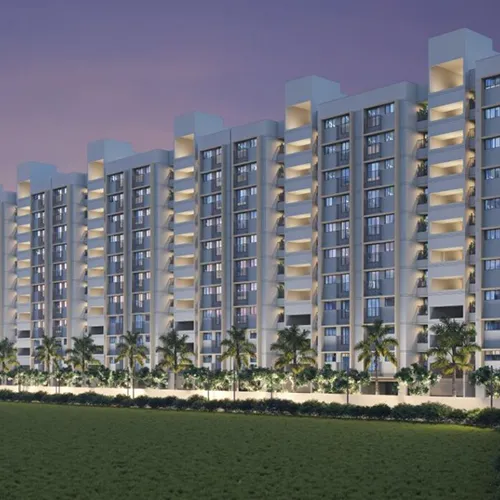
Best Residential Areas for 2/3 BHK Apartments in Ahmedabad
Ahmedabad has rapidly grown into one of India's most promising and dynamic real estate markets. The city's expanding infrastructure, thriving business ecosystem, and improving quality of life have made it a top destination for homebuyers and investors alike. Whether you are a first-time buyer looking for an affordable starter home or an experienced investor seeking strong long-term returns, Ahmedabad offers a diverse range of residential locations to suit every need and budget.
Choosing the right location is arguably the single most important decision in your home-buying journey. The right neighbourhood can enhance your daily lifestyle, reduce your commute time, provide access to quality schools and hospitals, and significantly boost your property's long-term value. Projects like Indraprasth Saptak are strategically developed in areas that carefully balance connectivity, infrastructure, peaceful surroundings, and modern amenities — making location selection simpler and smarter for today's buyers.
In this guide, we explore Ahmedabad's most preferred residential zones and explain exactly why each area has become a favourite among homebuyers and investors in 2024 and beyond.
Prahlad Nagar & SG Highway – Premium Lifestyle at Its Best
Prahlad Nagar and the SG Highway corridor consistently rank among the most sought-after residential destinations in Ahmedabad. This premium belt has evolved into a self-contained lifestyle hub that attracts professionals, business owners, and families who want the very best the city has to offer.
One of the biggest draws of this area is its remarkable proximity to major business hubs. Several multinational companies, IT parks, corporate offices, and co-working spaces are concentrated along the SG Highway stretch, making it an ideal location for working professionals who want to reduce daily commute stress. Living close to your workplace translates directly into more time for family, fitness, and leisure.
Beyond work, Prahlad Nagar offers an outstanding lifestyle ecosystem. World-class retail destinations like Ahmedabad One Mall, Alpha One Mall, and numerous premium retail outlets are easily accessible. The area is dotted with fine dining restaurants, cafes, entertainment centres, multiplexes, and fitness studios, ensuring residents have everything they need within a short drive.
Excellent road connectivity is another key advantage. The SG Highway provides smooth access to the airport, railway stations, and other parts of the city. The upcoming Metro Rail project is also expected to further improve connectivity in this corridor, making it an even more attractive location in the years ahead.
From a real estate investment perspective, Prahlad Nagar and SG Highway have consistently delivered strong property appreciation. The combination of premium infrastructure, corporate demand, and aspirational lifestyle make this one of Ahmedabad's most resilient and high-value real estate markets.
Bopal & South Bopal – Affordable, Spacious, and Family-Friendly
If Prahlad Nagar represents Ahmedabad's premium end, then Bopal and South Bopal represent its smart, value-driven middle ground — and they have become enormously popular for exactly that reason. Over the past decade, these neighbourhoods have transformed from relatively quiet suburban areas into thriving residential communities packed with modern housing options, schools, hospitals, and retail conveniences.
Developments like Indraprasth Saptak in this belt offer spacious 2 and 3 BHK apartments at pricing that remains accessible to a wide range of buyers — from young working couples purchasing their first home to growing families seeking more space without stretching their budget. The floor plans in these projects are thoughtfully designed to maximize usable space, with well-proportioned bedrooms, modern kitchens, functional living areas, and generous balconies.
The social infrastructure in Bopal and South Bopal has grown impressively. Top-rated schools like DPS Bopal, Udgam School, and Anand Niketan are located nearby, making the area exceptionally popular with families who prioritize their children's education. Reputable hospitals, diagnostic centres, and pharmacies are conveniently accessible, ensuring healthcare needs are never far away. Daily essentials are easily available through local markets, supermarkets, and retail chains spread across the neighbourhood.
The area also benefits from good road connectivity to SG Highway and other major arterial roads, making it practical for residents who commute to other parts of Ahmedabad. For buyers who want genuine value for money — a well-designed home in a vibrant, growing community — Bopal and South Bopal remain one of the best choices in the city.
Shela & Shilaj – Emerging Growth Zones with Tremendous Potential
Shela and Shilaj are the kind of locations that smart investors identify early — areas where infrastructure is improving rapidly, demand is building steadily, and property values still have significant headroom to grow. These emerging zones on the western periphery of Ahmedabad have gained considerable attention over the past few years, and for very good reasons.
The most immediate appeal of these areas is their peaceful, low-density character. Unlike the busier central and western zones, Shela and Shilaj offer a quieter, greener living environment where residents can enjoy open spaces, cleaner air, and a more relaxed pace of life. For families with young children or professionals who work from home, this kind of environment offers a welcome contrast to the noise and congestion of urban cores.
Infrastructure development in these zones is moving at a fast pace. New roads, flyovers, and utility improvements are being undertaken regularly, gradually bridging the gap between these areas and the more developed parts of western Ahmedabad. Connectivity to major highways like SG Highway is already reasonably good and improving further, making daily commutes manageable.
From an investment standpoint, Shela and Shilaj offer an attractive entry point. Property prices here remain lower than in established zones like Prahlad Nagar or Bopal, which means buyers can acquire larger homes or invest at lower price points while positioning themselves for meaningful appreciation as these areas continue to develop. Both homebuyers looking for peaceful living and investors seeking growth potential will find these locations well worth considering.
Chandkheda & Motera – The Connectivity Advantage
Located in the northern part of Ahmedabad, Chandkheda and Motera have carved out a distinct identity as well-connected, practical residential destinations. These areas appeal particularly to homebuyers who work in GIFT City, the Gandhinagar corridor, or near the Sardar Vallabhbhai Patel International Airport, as all three destinations are easily accessible from here.
Public transport connectivity is one of the defining strengths of Chandkheda and Motera. The BRTS (Bus Rapid Transit System) routes are well-established in this corridor, and Metro Rail connectivity has brought further improvements to daily commuting. Residents can travel across the city with relative ease, reducing dependence on private vehicles and making day-to-day life more convenient.
The presence of educational institutions — from schools and junior colleges to engineering and management institutes — is another significant draw for families considering this area. Access to quality education is a priority for most Indian homebuyers, and Chandkheda's strong educational ecosystem makes it a practical and appealing choice for families at various stages of life.
Commercial development in these areas has also been growing steadily. New retail hubs, office spaces, and business parks are coming up, gradually improving the area's overall livability and employment potential. For buyers who prioritize connectivity and practicality above all else, Chandkheda and Motera represent excellent value.
Satellite & Naranpura – The Established Heartlands
For homebuyers who prefer the security and comfort of well-established, fully-developed neighbourhoods, Satellite and Naranpura remain perennial favourites. These centrally located areas have been among Ahmedabad's most desirable residential zones for decades, and they continue to hold their appeal thanks to their unmatched social infrastructure and central accessibility.
Living in Satellite or Naranpura means having almost everything within easy reach. Premium schools, hospitals, banks, restaurants, retail stores, parks, and entertainment options are all woven into the fabric of these neighbourhoods. Residents rarely need to travel far for daily needs or leisure activities, which significantly enhances quality of life — especially for elderly residents and families with young children.
The established community character of these areas is also a major plus. Residents enjoy a sense of security and belonging that comes from living in mature, well-maintained neighbourhoods with active community associations, well-lit streets, and consistently high standards of civic infrastructure.
From an investment perspective, property values in Satellite and Naranpura are stable and have historically demonstrated steady appreciation. While entry prices are higher than in emerging zones, the lower risk profile and consistent demand make these areas a reliable choice for buyers who prioritize security over speculative growth.
What to Consider When Choosing a Location
While each of the areas described above has its own distinct strengths, there are a few universal factors every homebuyer should evaluate before making a final decision. Proximity to your workplace remains one of the most practical considerations — a long daily commute can significantly reduce quality of life over time. Access to quality schools and healthcare facilities is another critical factor, particularly for families with children or elderly members.
Future infrastructure development in the area — planned roads, Metro extensions, commercial projects — can have a significant positive impact on property values and daily convenience over time. It is always worth researching what is planned for the locality before committing to a purchase. Finally, consider the overall community and lifestyle fit. The best home is not just a well-designed apartment — it is a place where you feel genuinely comfortable and connected to your surroundings.
Conclusion
Ahmedabad's real estate market offers something truly valuable for every kind of homebuyer — from premium lifestyle zones to emerging growth corridors, from well-connected suburban neighbourhoods to established urban heartlands. Choosing the right location is the foundation of a smart, satisfying home-buying decision. Projects like Indraprasth Saptak are thoughtfully positioned in areas that offer the best combination of location advantage, modern living standards, strong community infrastructure, and long-term investment value. Take your time, do your research, and choose a location that truly fits your lifestyle, your family's needs, and your financial goals.
4 min read
Carpet area vs built-up area vs super built-up area explained
Carpet Area vs Built-Up Area vs Super Built-Up Area Explained
When it comes to buying a home in India, understanding exactly what you are paying for is absolutely essential. Yet one of the most persistent sources of confusion among homebuyers — both first-timers and experienced investors — is the difference between carpet area, built-up area, and super built-up area. These three terms are used constantly in real estate conversations, property brochures, and legal documents, but they mean very different things — and confusing them can lead to costly misunderstandings.
Whether you are exploring a well-crafted residential developments like Indraprasth Shivanta, Indraprasth Saptak or comparing multiple properties across different builders, Understandingthese terms can help you compare projects correctly, avoid paying for unusable space, and make smarter investment decisions.
In this guide, we breakdown each term in simple, practical language and explain exactly why the differences matter to your home-buying decision.
Carpet Area – The Actual Usable Space you Live In
Since the implementation of the Real Estate (Regulation andDevelopment) Act (RERA), developers are required to sell apartments based on Carpet Area, bringing greater transparency for buyers. This isa significant consumer protection measure, as it makes property pricing more comparable across different projects.
According to Section 2(k) of RERA, Carpet Area means:
The net usable floor area of an apartment excluding the area covered by external walls, service shafts, exclusive balcony or veranda area and exclusive open terrace area, but including the area covered by internal partition walls.
Carpet Area = Netusable area + Internal walls
Carpet area is the most honest and practical measurement of a home's size. In the simplest terms, carpet area refers to the net usable floor space inside your apartment — the area where you could literally lay a carpet from wall to wall. This is the space where you actually live, move around, place your furniture, and conduct your daily activities.
What it includes:
Carpet area includes all the areas within the apartment that you use directly: your bedrooms, where you sleep and store clothes; the living room, where you relax, entertain guests, and spend family time; the kitchen, where meals are prepared; bathrooms and toilets, which are essential functional spaces; and any internal corridors or passages that connect these rooms within the apartment itself.
What it excludes:
What carpet area does NOT include is equally important to understand. It excludes the thickness of the walls that surround and divide the internal spaces. It excludes balconies, terraces, utility areas, and any other spaces attached to the apartment but not enclosed within its main living area. It also excludes any common areas outside the apartment door.
How to calculate carpet area:
Suppose your apartment has the following dimensions:
In well-designed homes like Indraprasth Marigold, the carpet area is carefully optimized to ensure maximum efficiency of space. Good design means that every square foot of carpet area is genuinely usable — there are no awkward corners, wasted passages, or poorly proportioned rooms. When you visit a property, you may walk through each room and assess how the carpet area translates into practical, livable space rather than just looking at numbers on a brochure.
Built-Up Area – Adding the Structural Shell
Built-up area takes the carpet area and adds to it the spaceoccupied by the structural elements that make the apartment a physical reality.
Built-up Area = Carpet Area + External Wall Area + BalconyArea
As a general rule of thumb, built-up area is typically 10 to 20percent larger than carpet area. The exact percentage depends on the design of the building — the thickness of construction materials used for walls, the size of balconies provided, and whether there are utility areas attached to individual apartments. Understanding built-up area helps you appreciate the physical structure of what you are buying — not just the space you walk around in, but the walls, structure, and attached outdoor spaces that complete your home.
What it Includes:
Built-up area includes the carpet area plus the thickness of all internal walls (the walls that divide rooms within the apartment) and external walls (the walls that form the outer boundary of the apartment), as well as the area of balconies and any utility spaces or dry areas attached to the apartment. While balconies are included in the built-up area measurement, they genuinely add to the quality and character of an apartment in a way that is easy to appreciate in person.
How to calculate Built-up area:
Carpet Area = 750sq.ft
External Walls = 85sq.ft
Balcony = 65 sq.ft
Built-up Area = 750 + 85 + 65 = 900 sq.ft
In modern residential developments like Indraprasth Shivanta, balconies are carefully designed to serve both practical and aesthetic purposes. A well-designed balcony extends the livable feel of an apartment, provides space for potted plants or outdoor seating, and enhances natural light and ventilation with in the home. In all Indraprasth projects, buildings constructed with thicker traditional brick walls will show a larger gap between carpet and built-up area than buildings using modern lightweight construction systems.
Super Built-Up Area – The Saleable Area
Super Built-up Area is the Built-up Area plus a proportionate share of common areas and amenities shared by all residents of the building.
Super Built-up Area = Built-up Area + Proportionate CommonArea
Super built-up area is the most expansive measurement that builders and developers typically use as the basis for pricing in the absence of RERA-mandated carpet area pricing. This is also called the Saleable Area by many developers.
What it includes:
These common areas are substantial in most modern residential developments. They include the entrance lobby and reception area, which creates the first impression of the building; lift shafts and lift lobbies on every floor; common staircases and fire escape stairways; corridors and passages one very floor that provide access to individual apartments; the clubhouse and its associated facilities like gyms, swimming pools, and multipurpose halls; security cabins, generator rooms, pump rooms, and other utility spaces that serve the entire community.
In 3 BHK and 4 BHK projects like Indraprasth Saptak, these shared spaces are not mere functional necessities — they are designed to elevate the overall living experience. A beautifully designed lobby with high-quality finishes creates a sense of arrival. A well-equipped clubhouse becomes a community gathering point. Thoughtfully landscaped common areas between buildings enhance the visual appeal of the entire development. These amenities justify their proportionate inclusion in the super built-up area and genuinely enhance the quality of life for all residents.
The ratio of super built-up area to carpet area is commonly referred to as the loading factor or the floor space index loading. Indifferent projects, this ratio can vary significantly — from as low as 1.2 in projects with minimal common areas to 1.5 or even higher in luxury developments with extensive shared facilities.
Why the Difference Matters:
Comparison of Carpet Area, Built-Up Area, Super Built-Up Area
Let us put these concepts into practical context with a simple example.Imagine two apartment projects Project A and Project B, both advertised as1,200 square feet. Project A bases its measurement on super built-up area, while Project B bases it on carpet area. In Project A, the actual carpet area might be just 800 square feet — because a large loading factor covers common areas. In Project B, the 1,200 square feet is the actual space you live in.
If both projects charge the same price per square foot, ProjectB is offering dramatically more value. This kind of comparison is exactly whyRERA mandated carpet area pricing — to make comparisons fairer, more transparent, and more meaningful for buyers.
When you are comparing properties across different builders, always ask for and compare carpet area figures. Do not be misled by larger super built-up area numbers. A higher super built-up area simply means a larger proportion of your purchase price is going toward shared spaces rather than your own private living area.
Smart Buyer Tips for Area Calculations
1. Verify the floor plan to understand how much space is actually usable. Floor plans can also be misleading — physically walking through the actual space tells you much more about carpet area.
2. Don't rely only on the advertised super built-up area. Visit thesite and physically walk through the apartment amenities to get a genuine feelfor the space. Ask the developer to show you exactly what common areas are included in the super built-up area loading, so you can judge whether thoseshared spaces genuinely add value to your daily living experience.
3. Always ask for the RERA Carpet Area before comparing apartments. Compare pricing of properties using price-per-square-foot of carpetarea, not price-per-square-foot of super built-up area, for a true apples-to-apples comparison between projects.
4. Always insist on getting the carpet area in writing, as part of the official agreement and not just as a verbal assurance.
5. Check the project's RERA registration and approved plans before booking. Under RERA, developers are legally required to provide thisinformation.
Conclusion
Understanding the difference between carpet area, built-up area, and super built-up area is one of the most empowering things a homebuyer can do before entering the market. These three measurements are not interchangeable, and treating them as if they are can lead to significant misjudgments about the true value of a property. Developments like Indraprasth Shivanta are built on a commitment to transparency and customer trust, giving buyers complete clarity on all area measurements so that every purchase decision is made with full information and genuine confidence. Knowledge is your greatest tool as a homebuyer — use it well.
Frequently Asked Questions
Which area is used under RERA?
RERA mandates that apartments be sold and disclosed based on CarpetArea.
Is balcony included in Carpet Area?
No. Exclusive balconies and verandas are excluded from the RERA definition ofCarpet Area.
What is the difference between Carpet Area and Built-up Area?
Built-up Area includes the Carpet Area along with the external wall thicknessand balcony area, whereas Carpet Area represents only the usable indoor space(including internal partition walls).
Why is Super Built-up Area larger?
It includes your apartment plus a proportionate share of common areas such ascorridors, staircases, lobbies, lifts, and other shared amenities.
